
Scientists Say Star Trek's Transporters Are Closer To Reality Than You Think
Instant travel seems impossible, but a recent breakthrough may change everything we thought we knew about the futuristic concept.
Read More

Instant travel seems impossible, but a recent breakthrough may change everything we thought we knew about the futuristic concept.
Read More
More advanced computers are at the top of many a wish list, and mushrooms, with their uniquely brain-like structures, just might hold the key.
Read More
If you've been driving around your city at night, you might have seen a few of the streetlights have turned purple and wondered what was going on.
Read More
If you grew up with a CRT TV, you probably remember the static charge of its screen; that's still there, but you probably can't feel it anymore.
Read More
Engineers often need to know how to quickly switch between values measured in watts and those measured in volts. Fortunately, the converstion is fairly easy.
Read More
Using a graphing calculator might seem like a daunting task, but following these simple steps will allow you to take advantage of its capabilities.
Read More
Electrical circuits are used to transmit current, and there are plenty of calculations associated with them. Voltage drops are just one of those.
Read More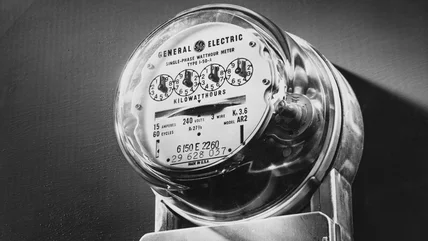
If you've looked at an energy meter, you might have seen the unit KWh, but what does it mean? And what can you really make of the data it's giving you?
Read More
Theta is a common enough symbol when it comes to math, so how do you get to it on a calculator? If you own a TI-84, here's all you need to know.
Read More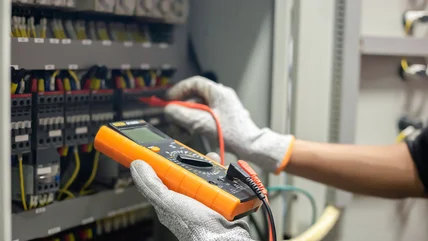
Electricity really is a staple of modern life; a lot of technology couldn't even exist without it. Everyone uses it all the time, but how does it really work?
Read More
AI has become a pretty hot topic, and it's one that comes with plenty of ethical questions. The topic of schooling has even been affected, and here's how.
Read More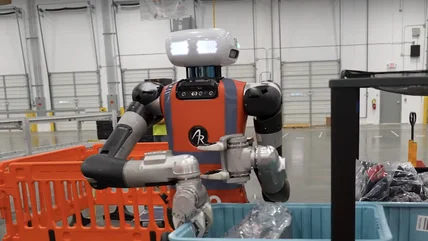
The fear of robots taking over human jobs isn't a new one, and not only that, but it's a reality that's a whole lot closer than you might think
Read More
Sometimes, advanced mathematics are a little too complicated to do by hand. In such a case, it's helpful to know how to make the best of graphing calculators.
Read More
When it comes to statistics, one of the ways to standardize data sets is to use something called a z-score. Here's how you can find it on a TI-84 Plus.
Read More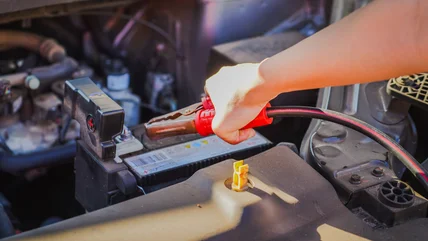
Everyone's familiar with having to recharge batteries every now and again. If you've ever wondered about the science behind that, though, here's a primer.
Read More
While both kilowatts and horsepower measure the same thing, you might want to know how to switch from one unit to the other. Here's how you do it.
Read More
Scientific terms can sometimes look frustratingly similar, as is the case for silicon and silicone. But the two materials are very different, and this is how.
Read More
Flashlights have come a long way from their late-1800s origins. The simple yet effective portable device also got its name thanks to its primitive design.
Read More
Increasing the survivability of robots might sound dystopian, but Yale researchers done just that by presenting a robot that can amputate its own limbs.
Read More
Moving charges create magnetic fields. Electrons have spin and hence act as magnetic dipoles. If all electrons in a molecule or atom are paired, these dipole moments cancel and there is no net magnetic field. In some materials, however, the atoms or molecules have unpaired electrons, so the atoms can be "lined up" by a magnetic field. These materials are either paramagnetic (if a magnetic field only reorients them temporarily) or ferromagnetic (if the reorientation is permanent) and are attracted to magnets. Many other substances, however, are not magnetic.
Read More
The potential difference in a circuit is what causes current to flow through the circuit. The larger the potential difference, the faster the current will flow and the higher the current. The potential difference is the measure of the difference in voltage between two distinct points in a closed circuit. Potential difference also is known as p.d., voltage difference, voltage or electric potential difference. This measure also is the energy per unit charge that is required to move a charged particle from one point to another.
Read More
The Nernst equation is used in electrochemistry and is named after physical chemist Walther Nernst. The general form of the Nernst equation determines the point at which an electrochemical half-cell reaches equilibrium. A more specific form determines the total voltage of a full electrochemical cell and an additional form has applications within a living cell. The Nernst equation uses the standard half-cell reduction potential, the activity of the chemical in the cell and the number of electrons transferred in the cell. It also requires values for the universal gas constant, the absolute temperature and the Faraday constant.
Read More
How to Calculate the Duty Cycle of a Frequency. The duty cycle of a signal measures the fraction of time a given transmitter is transmitting that signal. This fraction of time determines the overall power delivered by the signal. Signals with longer duty cycles carry more power. This makes the signal stronger, more reliable and easily detected by receiving equipment. Signals with longer duty cycles require less efficient receivers than do signals with shorter duty cycles.
Read More
A gaussmeter measures the strength and direction of a magnetic field and may also be called a magnetometer. The standard unit of measure is the tesla, but this is a very large quantity of magnetism for most applications. The gauss is generally a more commonly used unit and is equal to 0.0001 tesla. A gaussmeter generates an electrical current in response to a magnetic field that can then be used to move an indicator needle. You can make a simple gaussmeter at home from basic electronic components.
Read More
DeWalt's rechargeable 18V batteries, which feature a nickel-cadmium power cell, give you the power to take on professional-grade building and remodeling projects without the hassle of an extension cord. With time, however, their electrical capacity diminishes considerably, forcing you to buy a replacement. Rather than risk the deadly cadmium leaking into a landfill, you can have your old battery safely recycled at a high-temperature metal reclamation (HTMR) facility.
Read More
The most common form of matter in the universe, plasma is defined by the Southwest Research Institute as "a hot ionized gas containing roughly equal quantities of positively charged ions and negatively charged electrons," and is considered a fourth state of matter distinct from solid, liquid, or gaseous matter. A plasma ball is essentially a miniature Tesla coil channeling an alternating voltage of about 2-5 kilovolts at a frequency of about 30 Hertz, enclosed within a glass ball containing an inert gas such as neon or argon.
Read More
Metallic objects fall under subdivisions of various metals. One of the largest categories is nonferrous metals. The chemical composition and properties of nonferrous metals can be an advantage in certain applications. However, some of the properties that nonferrous metals possess are considered a disadvantage and may exclude this metal from certain uses and applications.
Read More